BAILER
MULTIROLLER
Projects
-
![South Melbourne mural by Melbourne graffiti artist Bailer, featuring a surreal blue cityscape and red-and-white graffiti lettering.]()
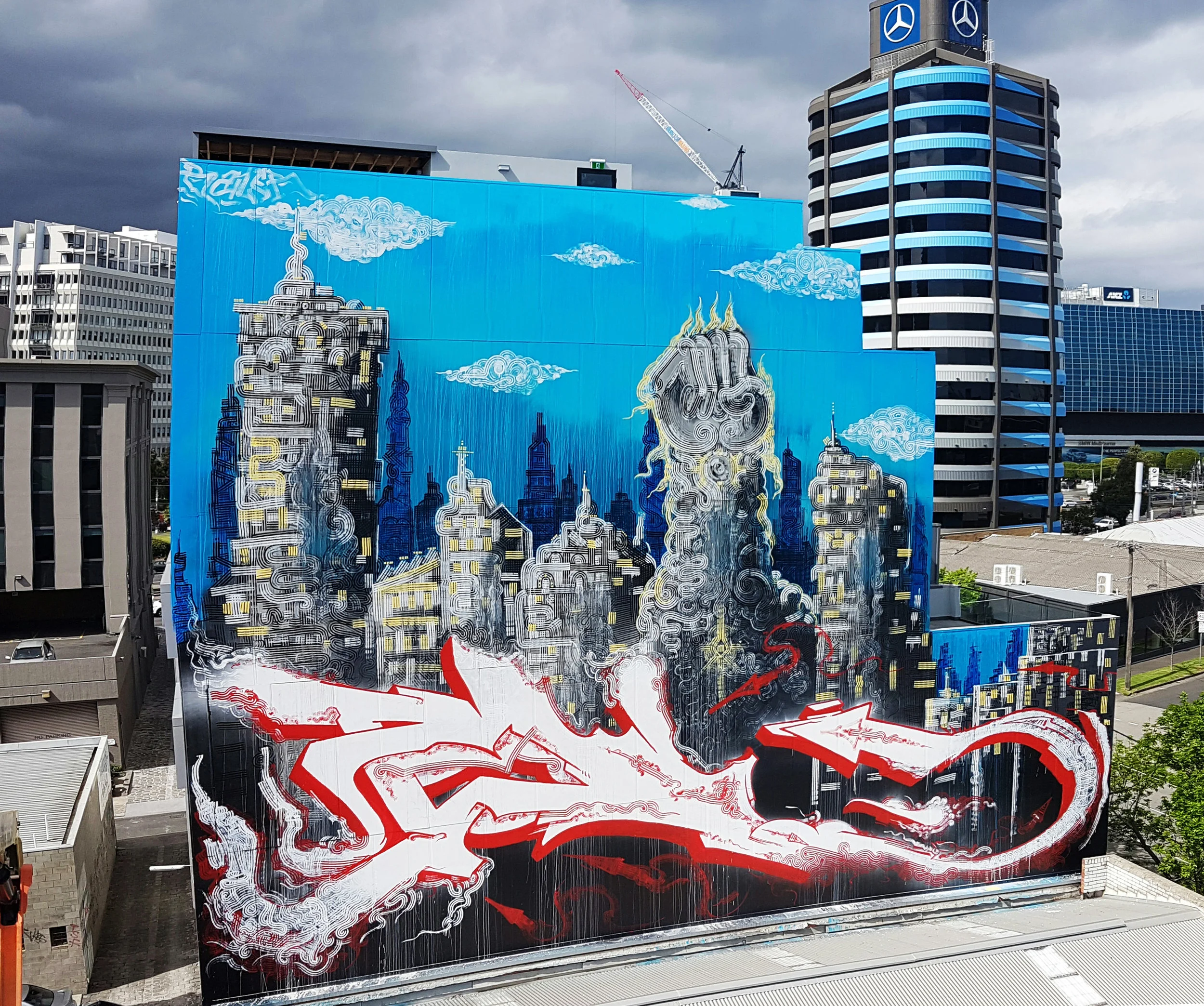
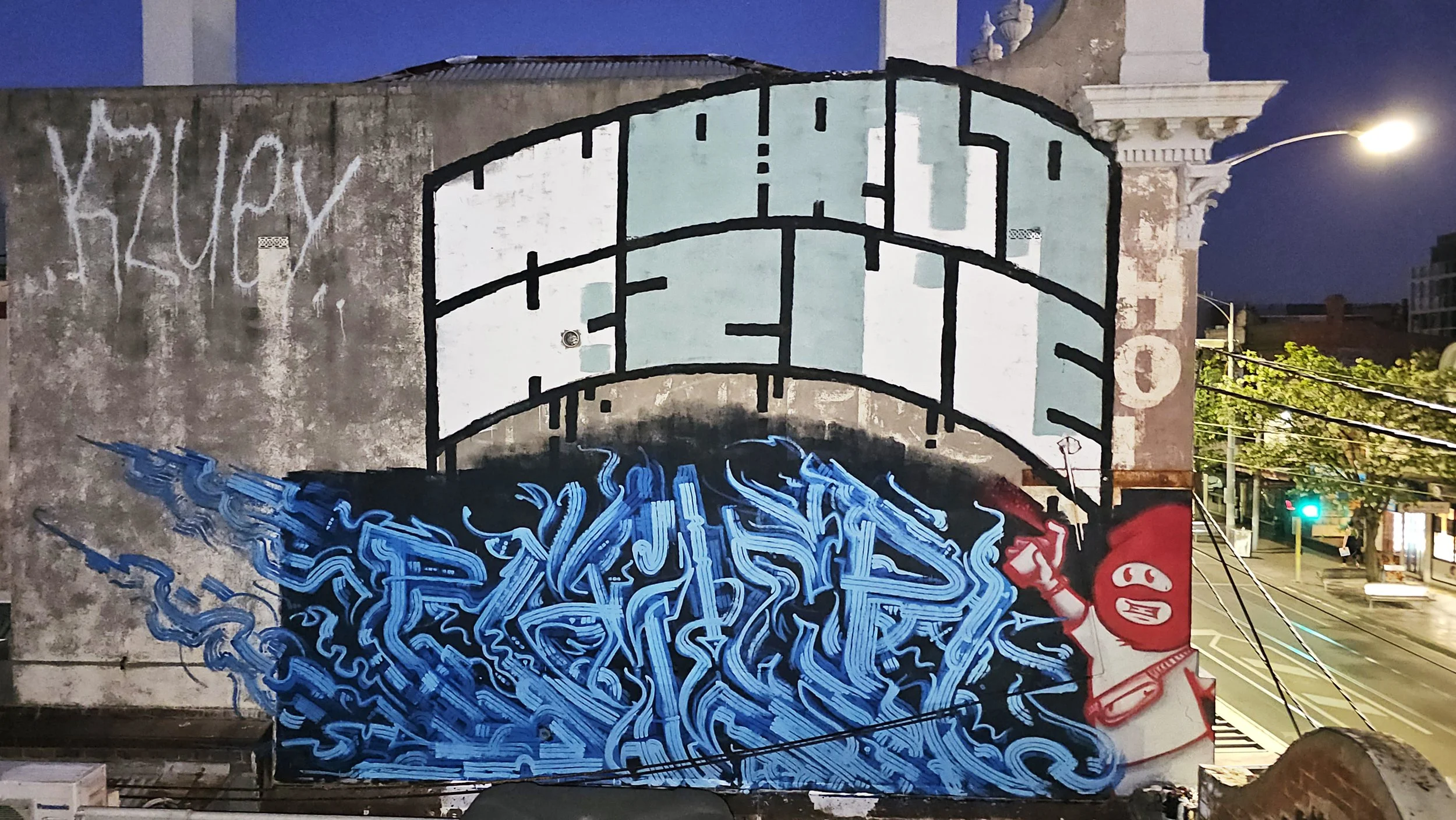
Bailer City, South Melbourne
I painted this eight-storey mural in South Melbourne using my signature Multiroller technique.
The image depicts a hallucinatory cityscape that feels modern and ancient at the same time. The buildings are alive, with one reaching for the sky like an ancient totem. A large graffiti piece floats in front of the city, embellished with intricate filigree inspired by the clouds, waves and temple details I’ve seen throughout Asia.
-
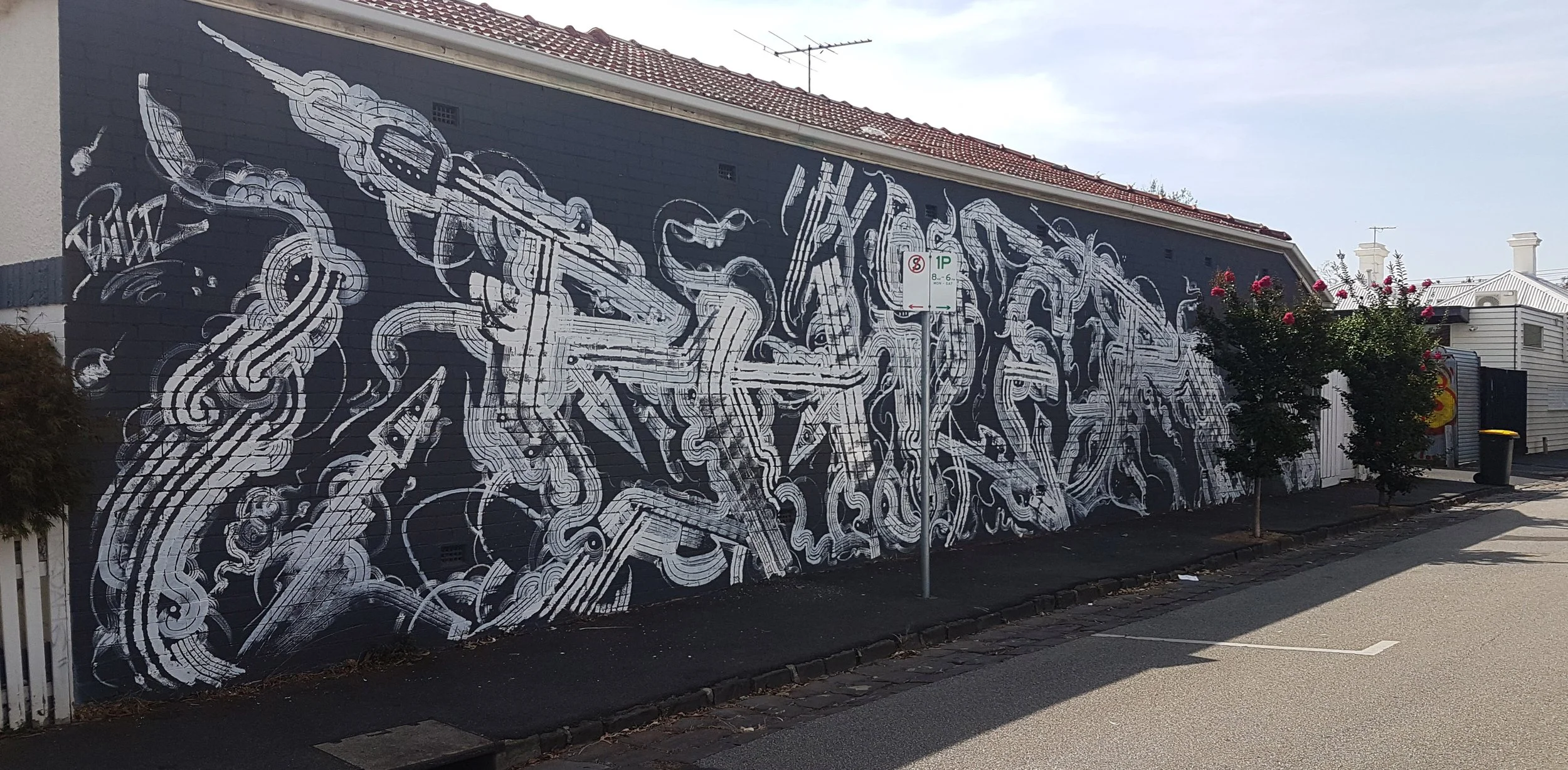
![Melbourne Central mural by Melbourne graffiti artist Bailer, featuring flowing white Multiroller linework across a black ceiling and feature wall inside the T2 flagship store.]()
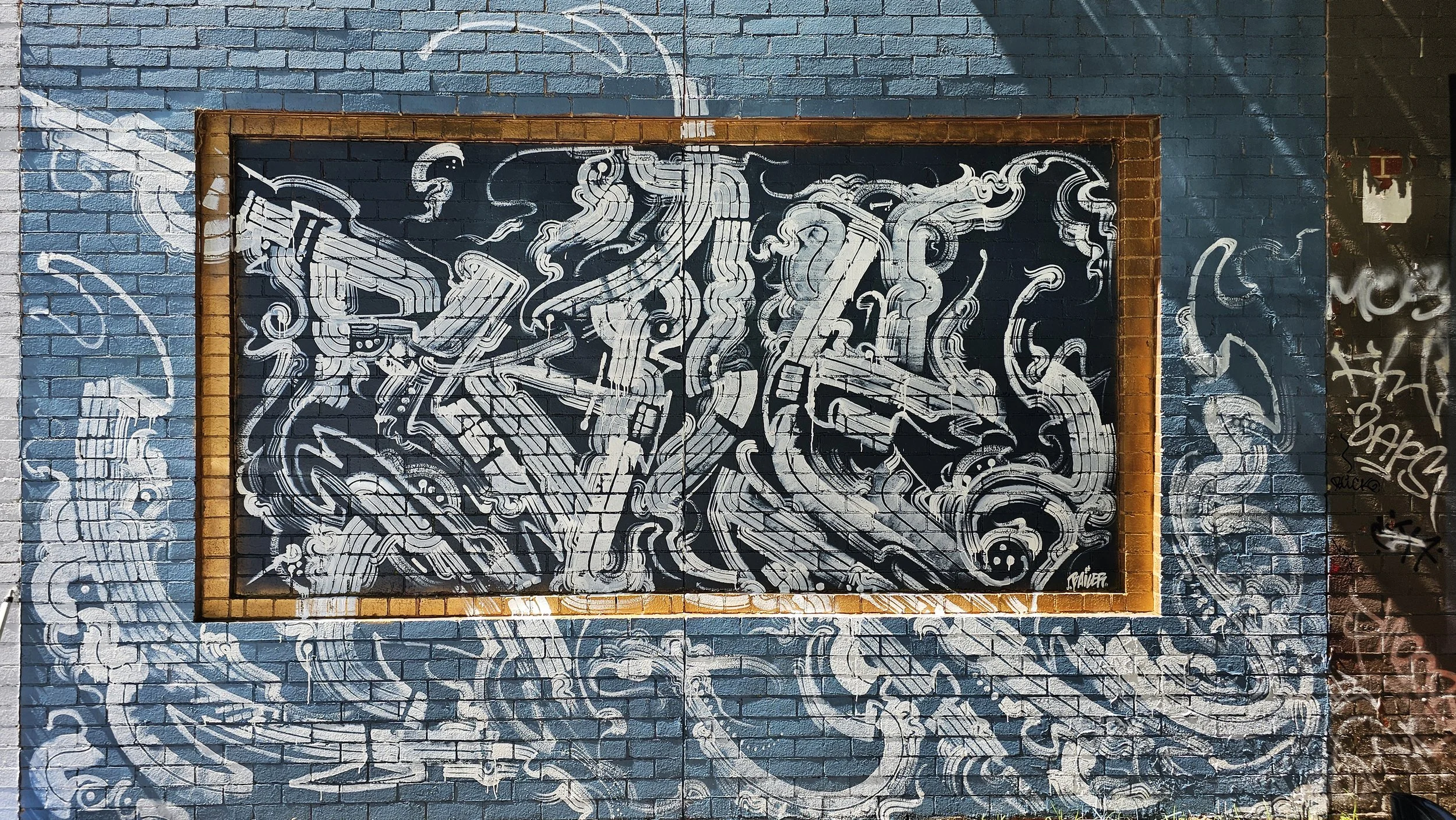
T2, Melbourne Central
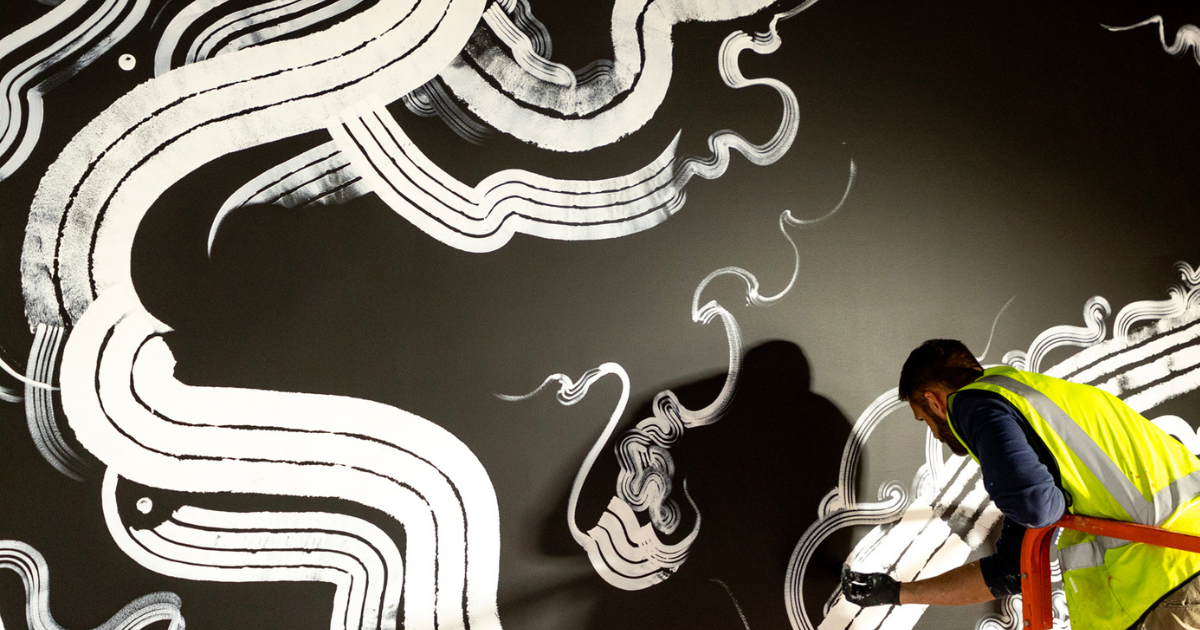
For the new T2 flagship store at Melbourne Central, I was asked to paint the ceiling and a feature wall using my Multiroller style.
I kept the palette to white on black for maximum impact, letting the flowing lines and shapes carry across the space. As you enter the store, the work wraps around you and creates an almost meditative feeling.
-
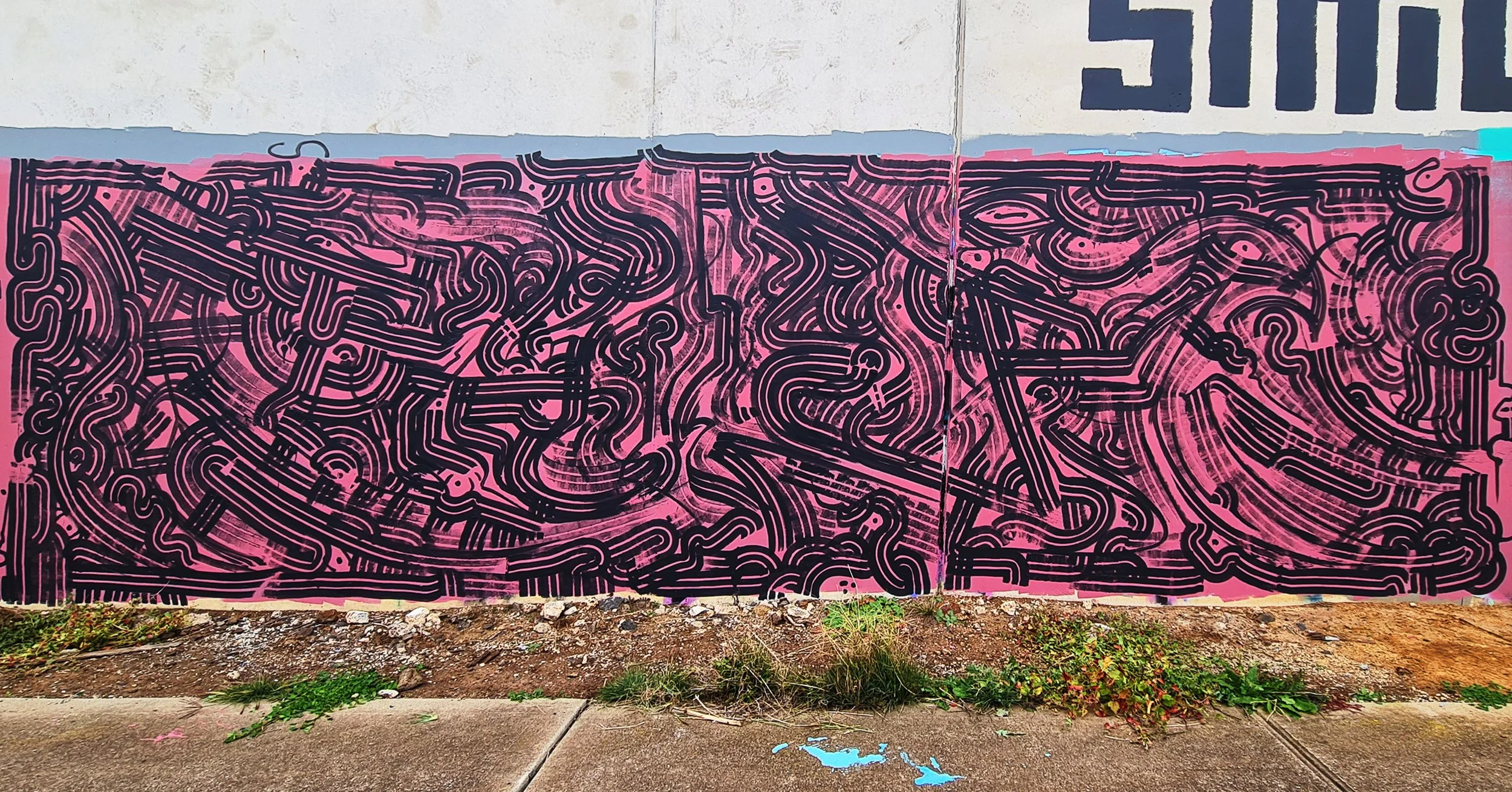
![Highpoint mural by Melbourne graffiti artist Bailer, featuring large-scale Multiroller linework in bold primary colours with black and white.]()
Changing Lines, Highpoint
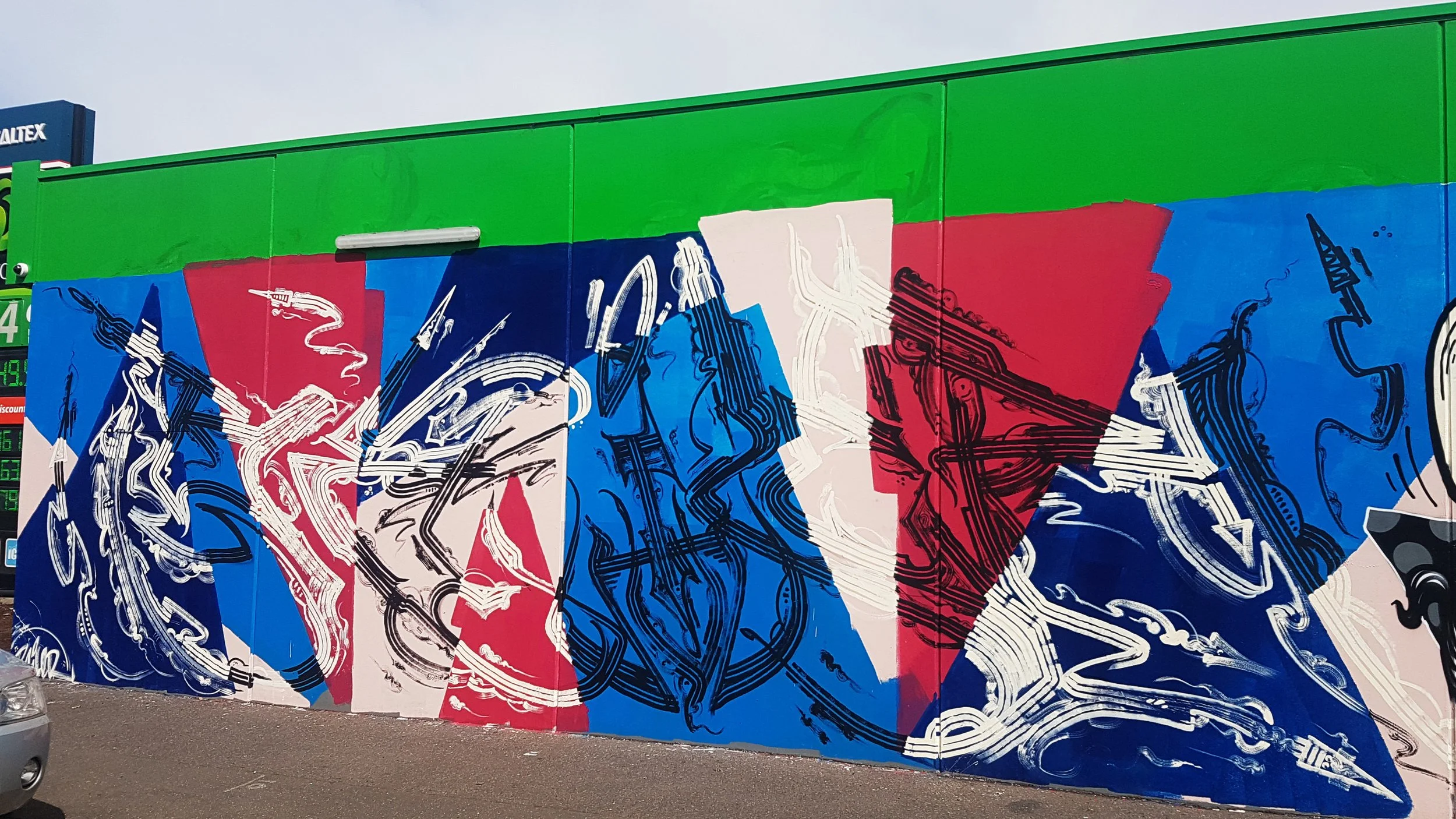
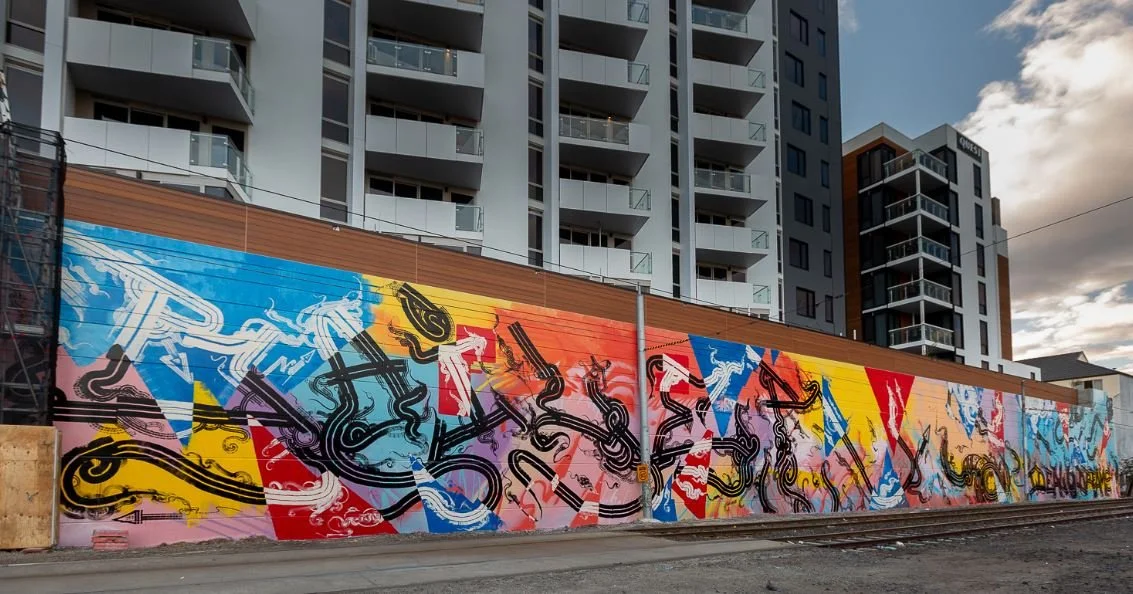
Probably my longest artwork to date, this piece runs for roughly 100 metres along the tram line at Highpoint. Painting it felt like an ultramarathon and a full-body workout.
I used a mostly primary colour palette with black and white to keep the work bold and bright, balancing bursts of warm colour with cooler sections across the length of the wall.
-
![St Kilda mural by Melbourne graffiti artists Bailer and Luke Presto, featuring controlled linear graffiti forms erupting into chaotic abstract marks.]()
Contrast, St Kilda
Painted with Luke Presto in St Kilda using fire extinguishers, weed sprayers, rollers and other graffiti techniques, this large-scale work explores the contrasts that define the area: rich and poor, connected and isolated, gym junkies and junkies.
The piece itself mirrors that tension, shifting from neat, controlled lines into a wild explosion of colour and movement, as though the energy inside the letters is trying to break free.
-
![Aspendale mural by Melbourne graffiti artist Bailer, featuring an orange-painted building, large graffiti lettering and a character portrait.]()
Bailer Street Sport, Aspendale
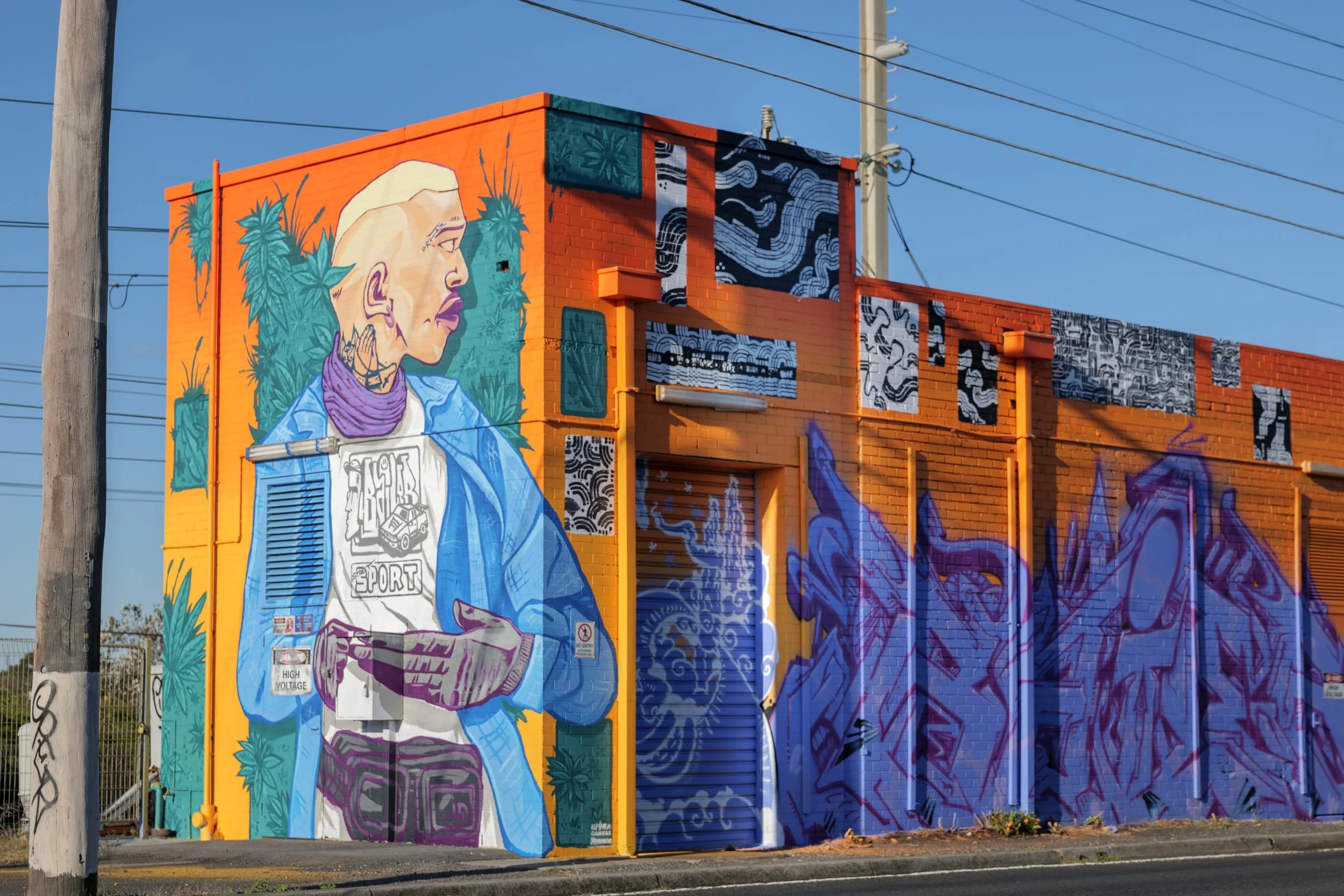
I painted this large mural in Aspendale on the Nepean Highway as part of the Urban Canvas festival.
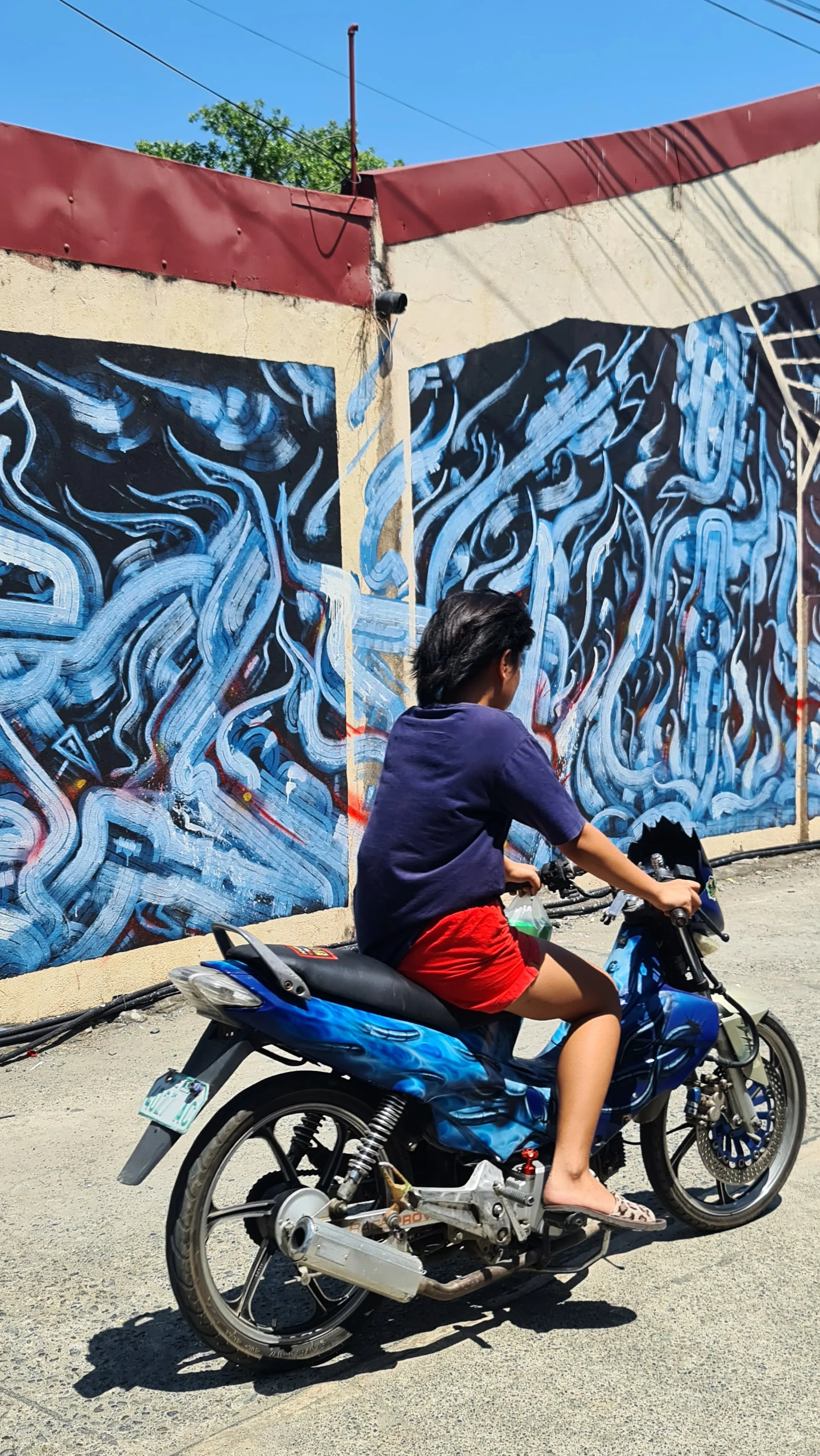
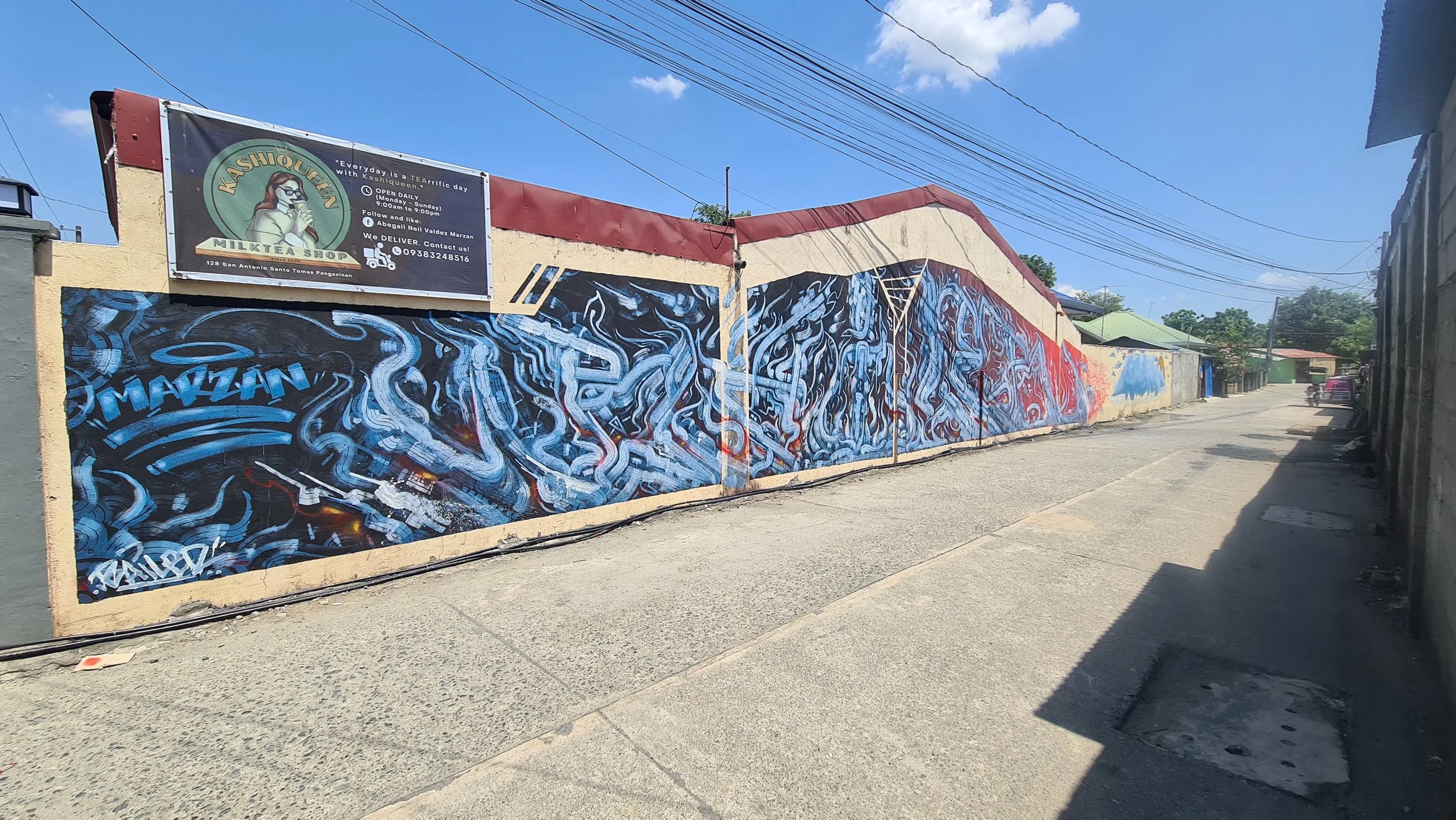
The power substation had long been a local graffiti spot, so I used the opportunity to bring some of that history back into the space. I painted the building in a warm orange fade and invited members of CI crew to paint the track side. The character is based on a photo I took in Manila, Philippines.
-
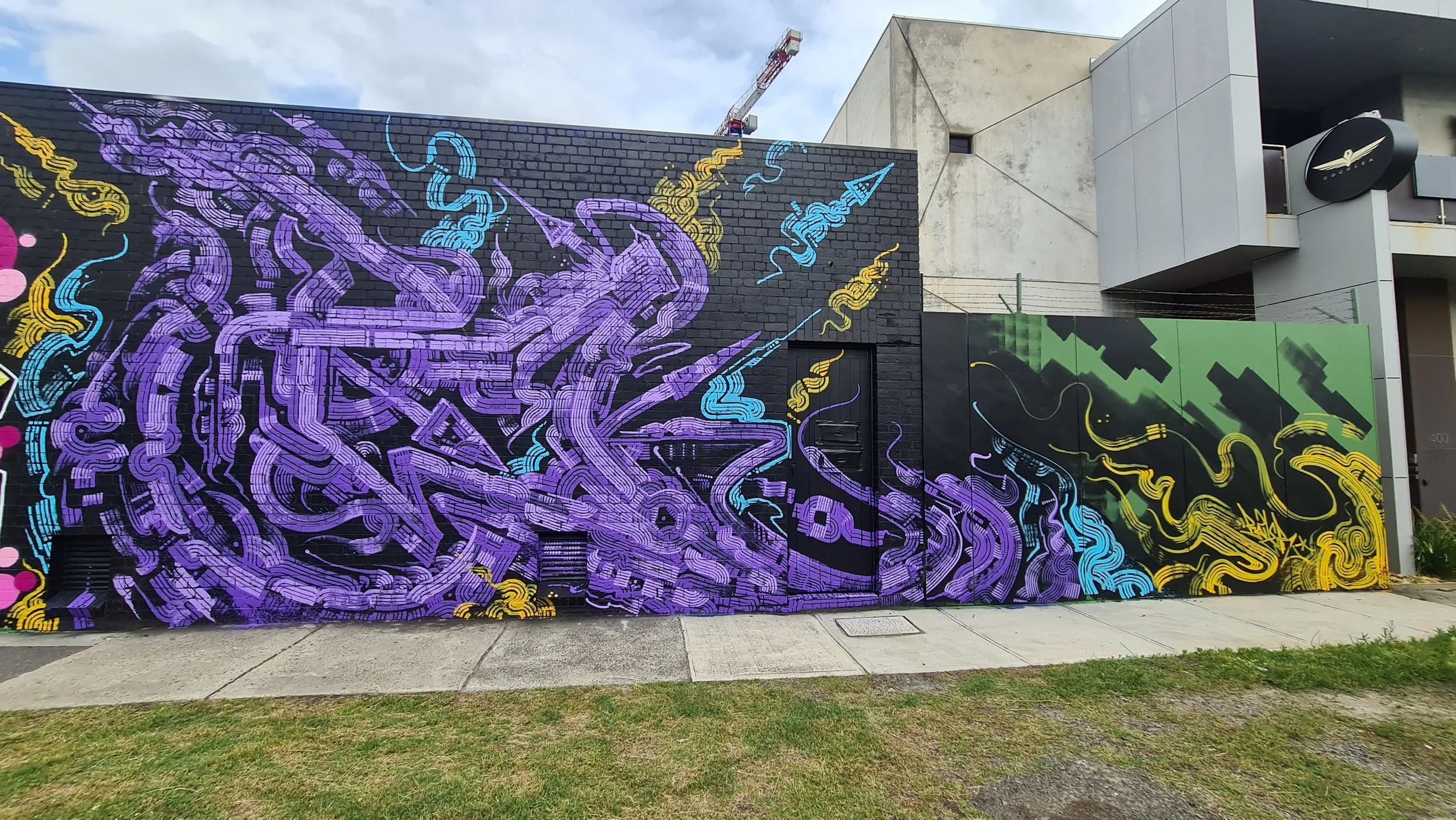
![Elwood mural by Melbourne graffiti artist Bailer, featuring dark blue ocean-inspired forms with white Multiroller linework.]()
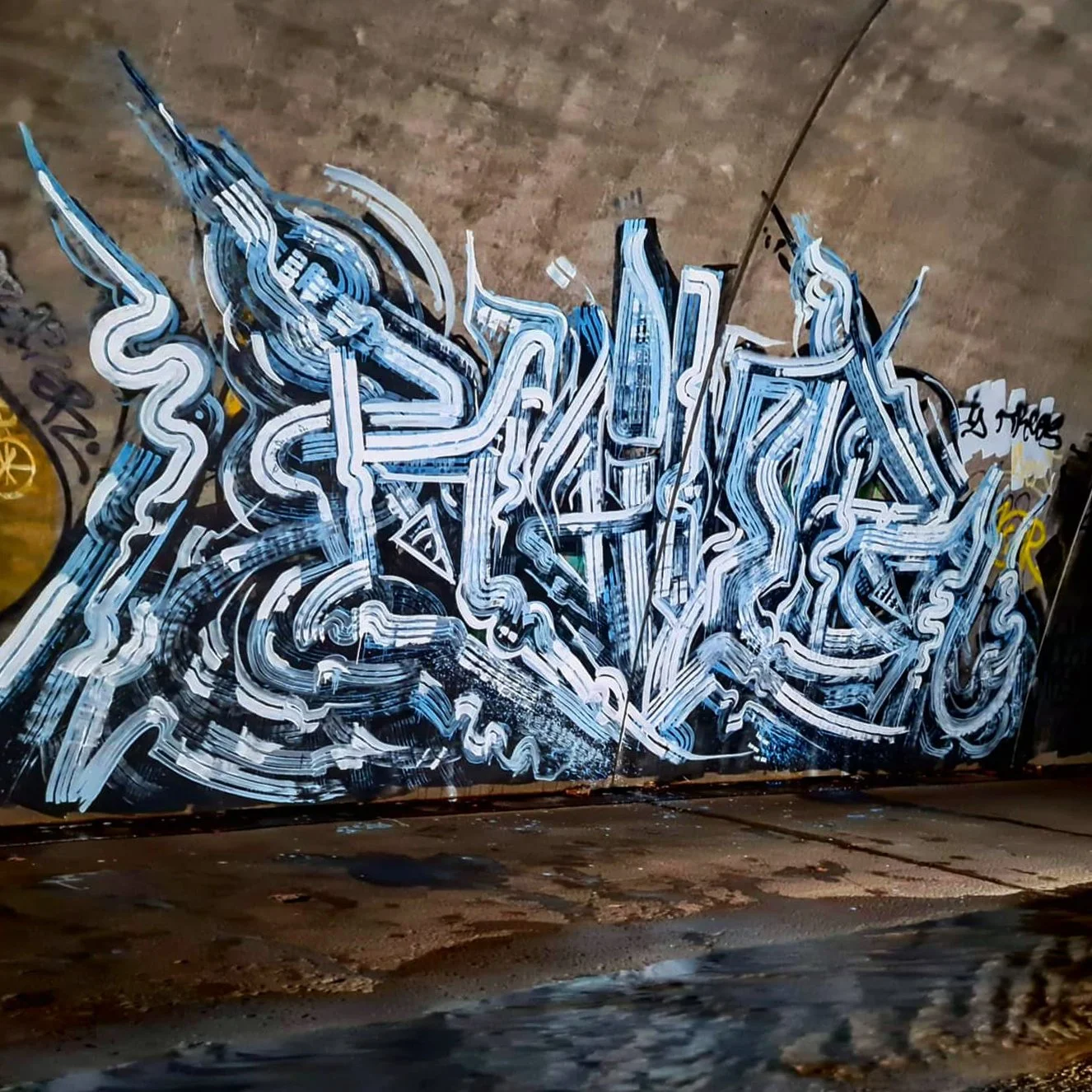
Point Ormond, Elwood
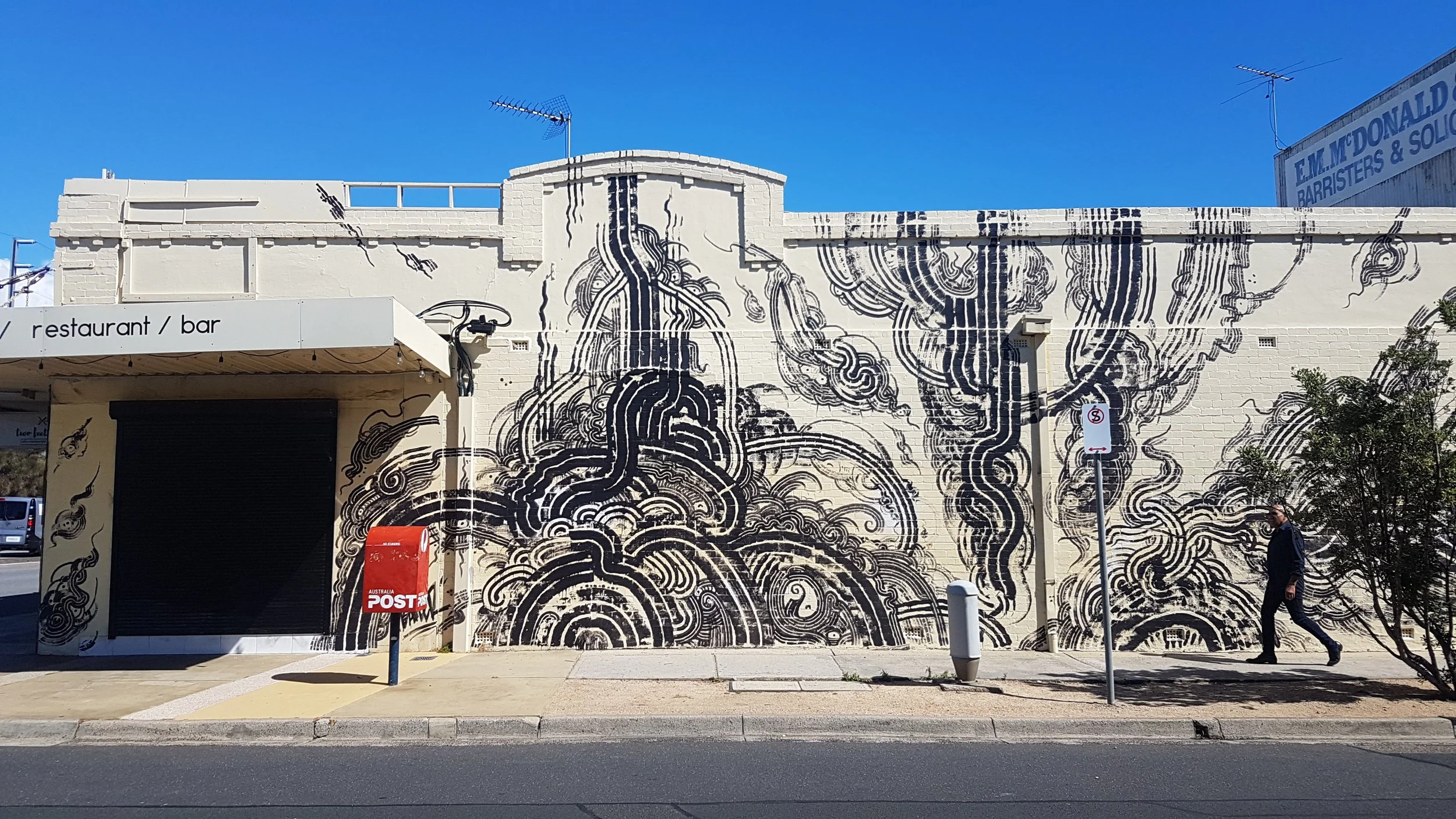
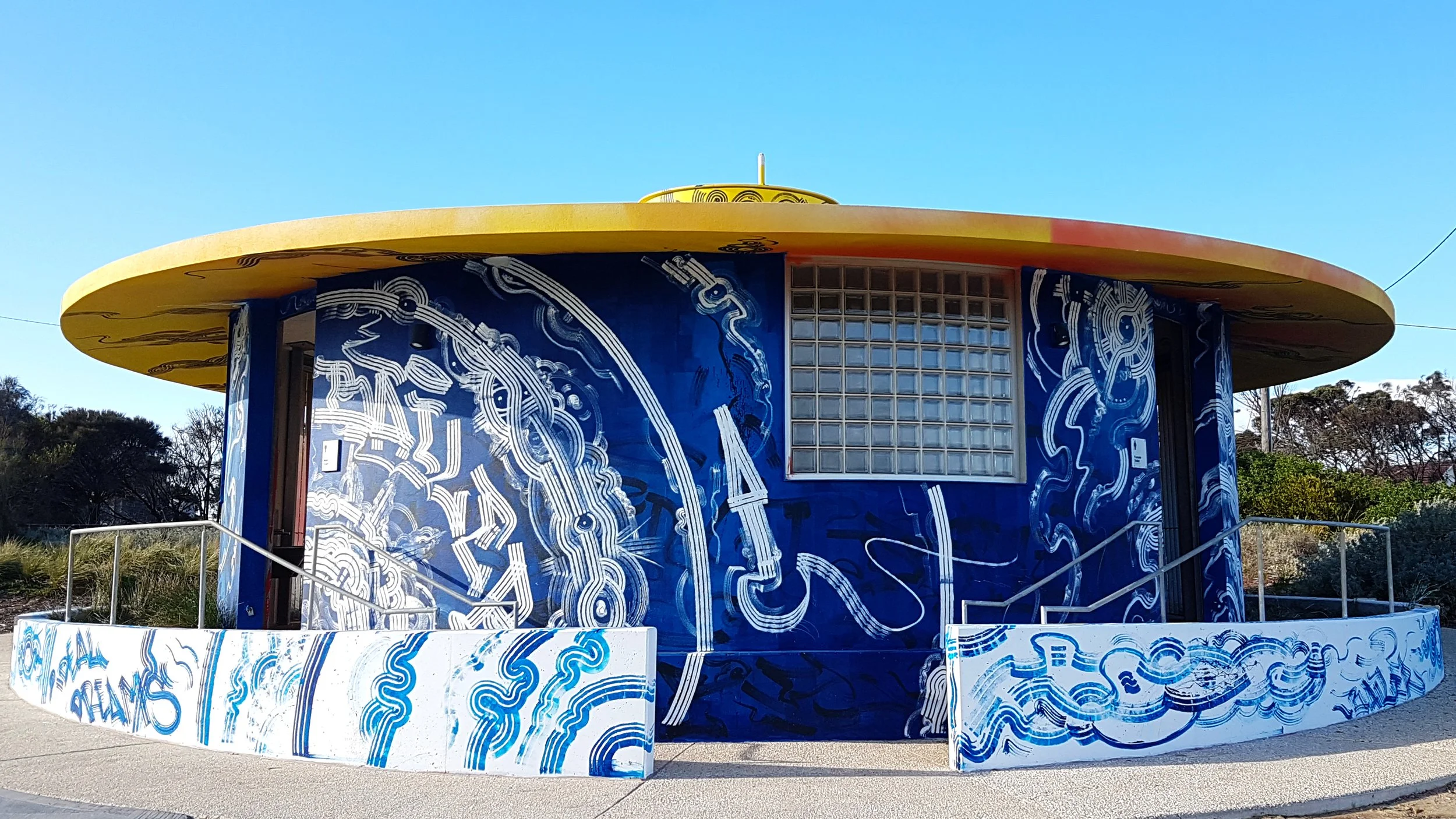
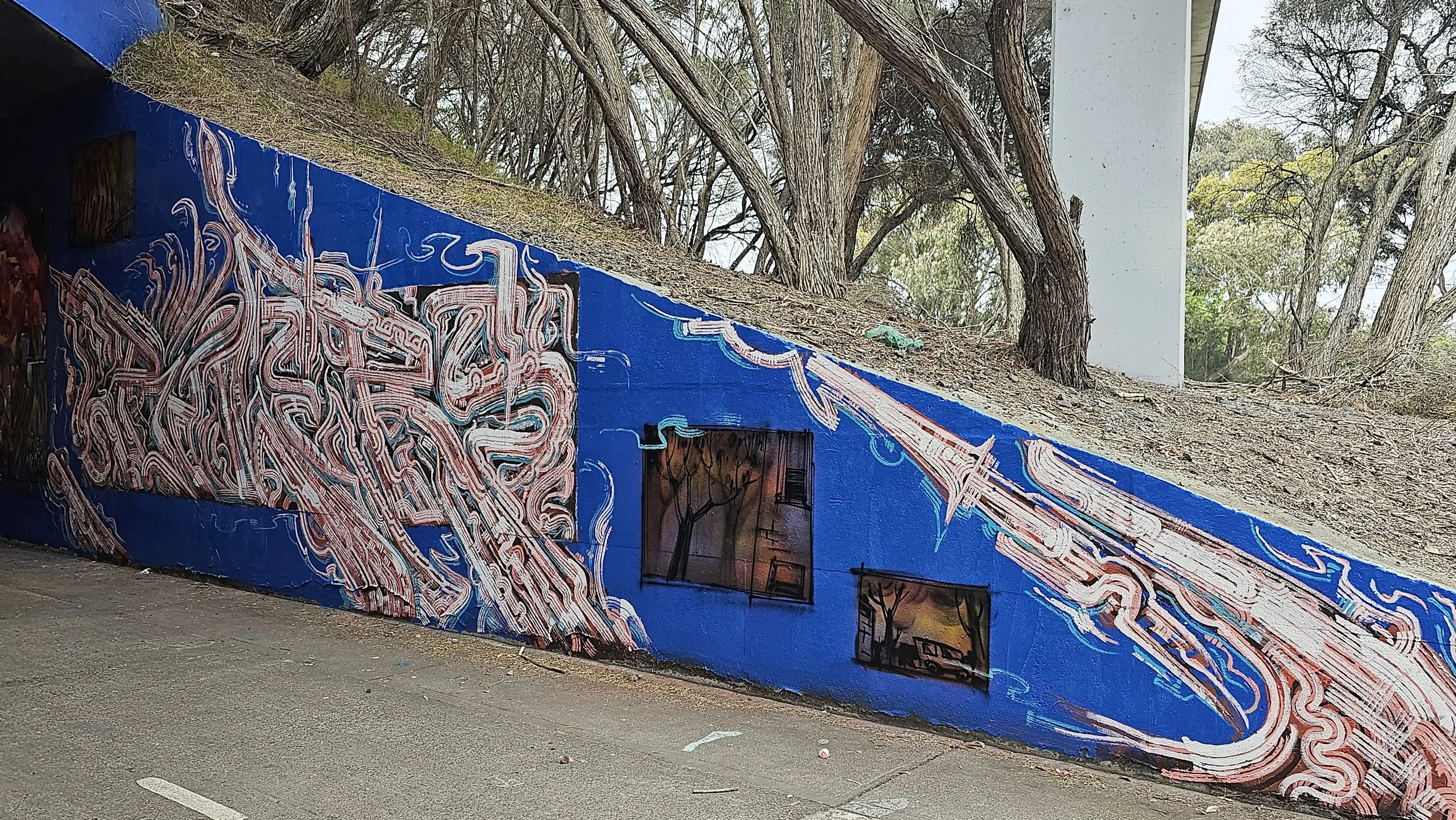
Right on the beach at Point Ormond in Elwood, I covered this small building in a dark blue ocean palette, with white Multiroller embellishments layered on top.
The approach was simple, but the flowing shapes gave the whole structure a strange, sea-creature quality and a strong sense of movement.
-
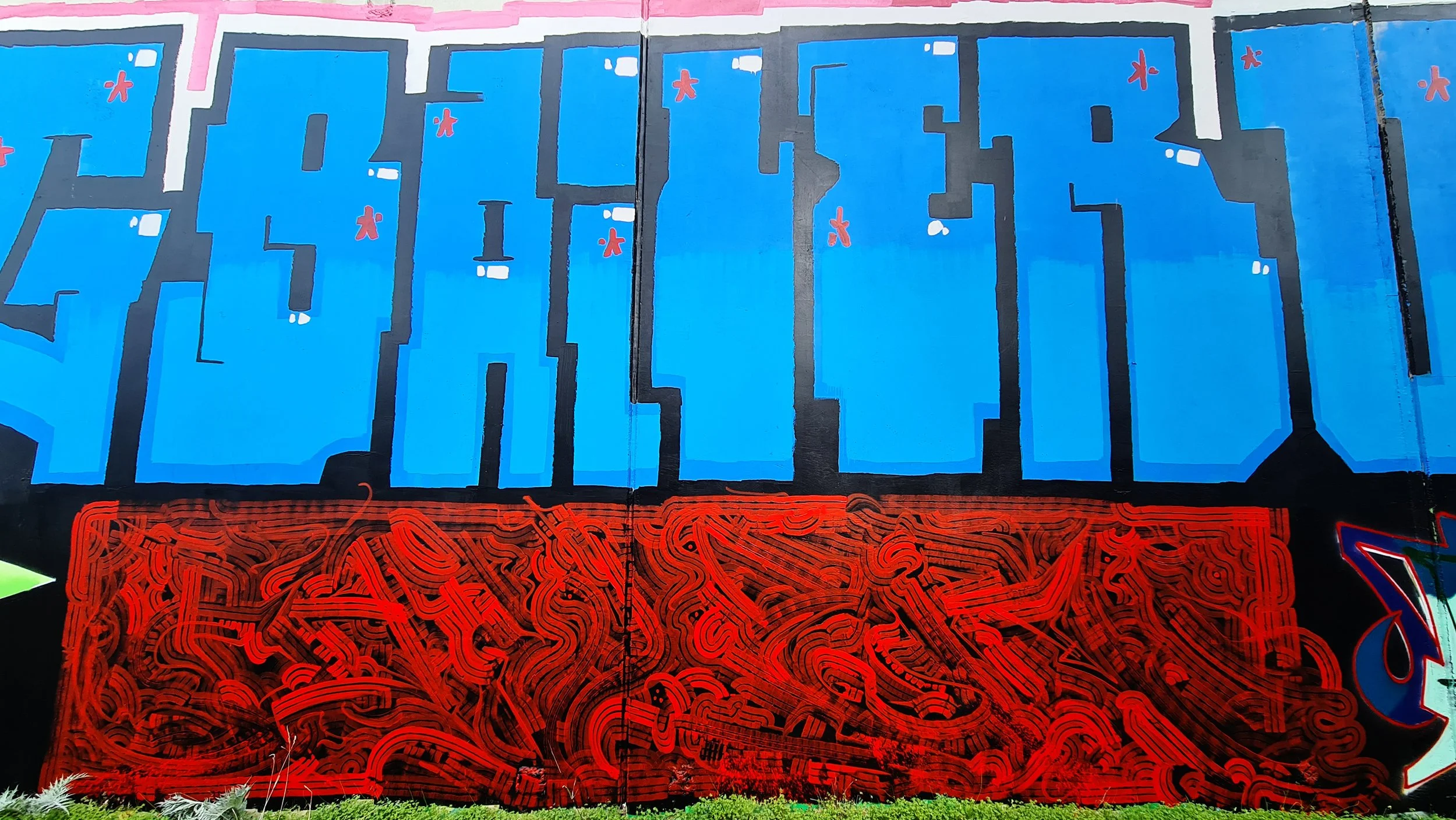
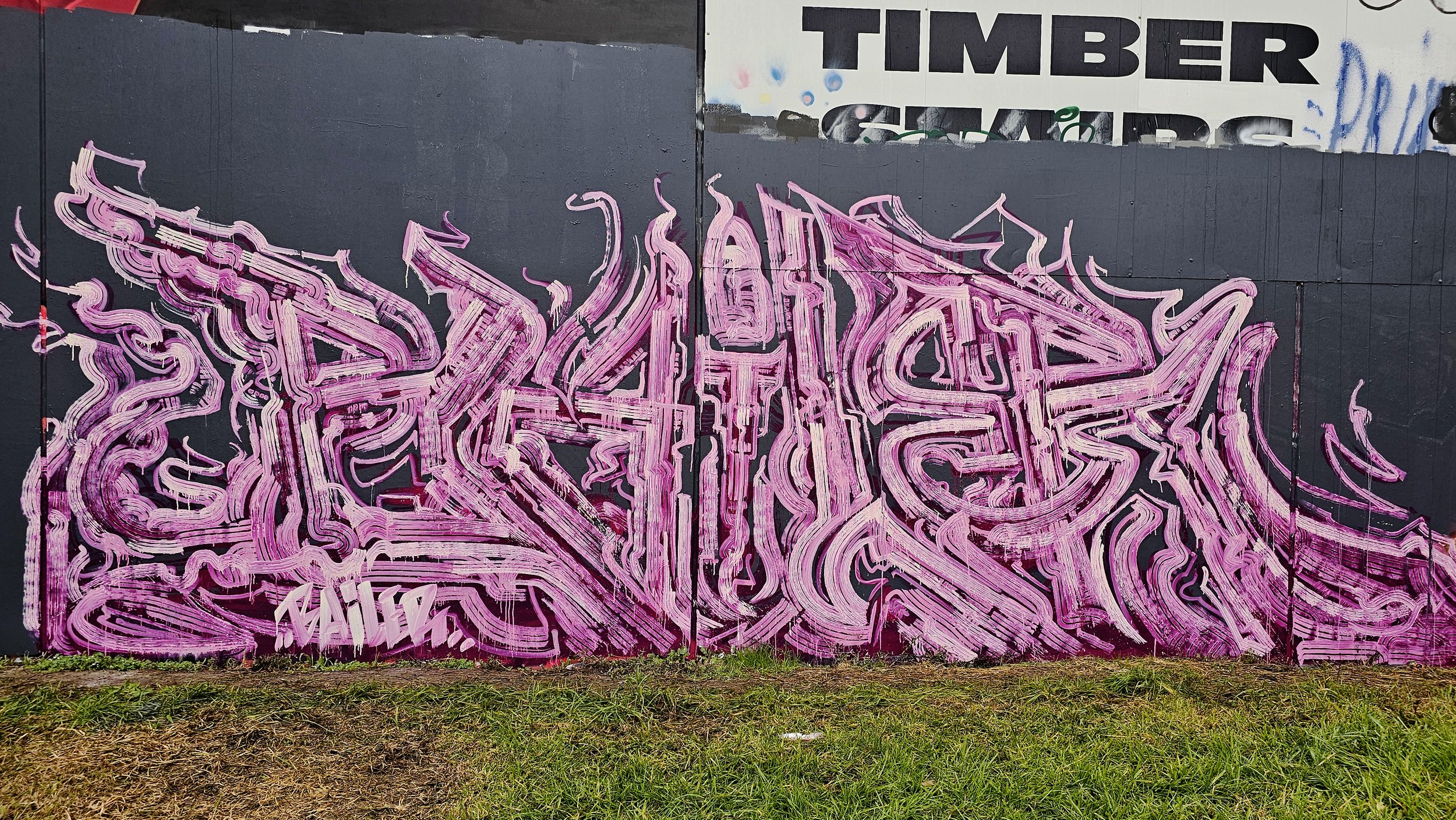
![Port Melbourne mural by Melbourne graffiti artist Bailer, featuring a large-scale letter B with flowing Multiroller forms and a minimal colour palette.]()
Big B, Port Melbourne
Fellow artist Ling organised a large-scale alphabet project, with different graffiti writers each taking on a letter around Melbourne. I was given the letter B, which felt pretty appropriate. Painted in the back streets of Port Melbourne, the piece is roughly 4 by 12 metres.
I kept the colour palette minimal so the focus stayed on the structure of the letter and the flowing shapes of the Multiroller.

Walls
The story behind
the Multiroller
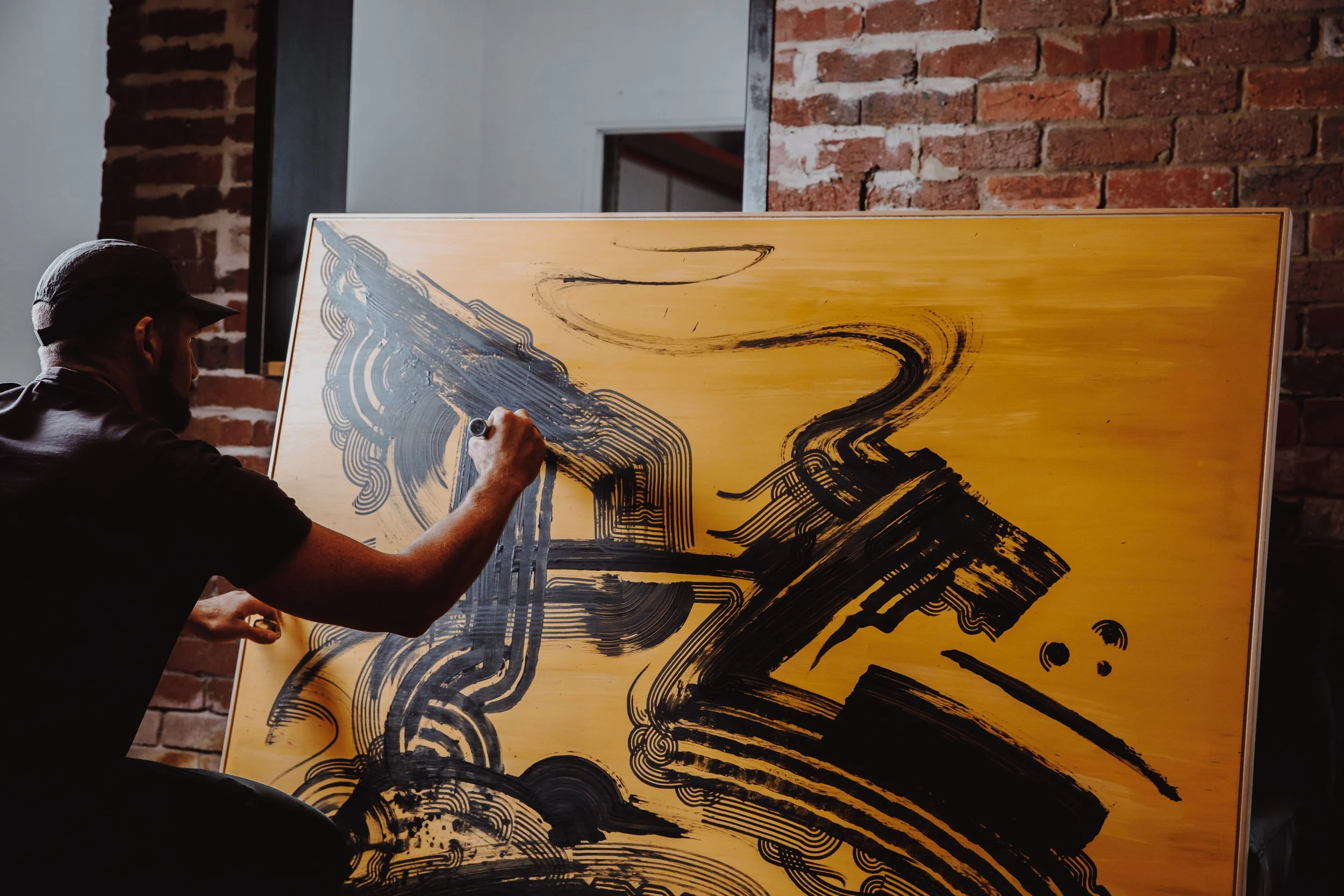
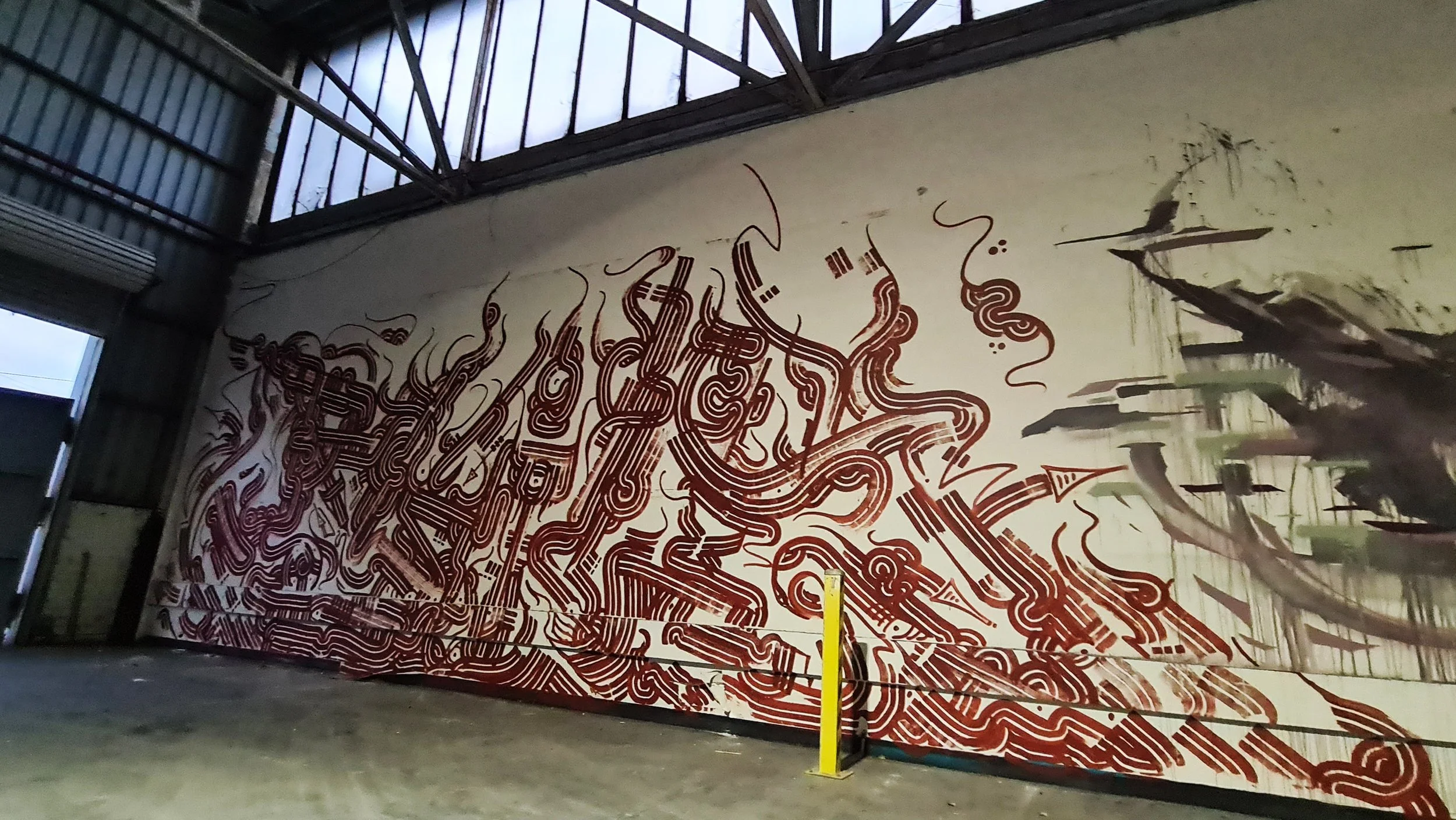
I came up with the Multiroller technique in 2017 while escaping a Melbourne winter and spending a few weeks painting in Bali. At the time, I had been getting sick pretty regularly. After nearly 18 years of working with spray paint, I found out I had extremely high levels of metals and other toxins in my system. My body was struggling to clear them, so even something fairly minor like a cut, a cold or a virus could completely wipe me out.
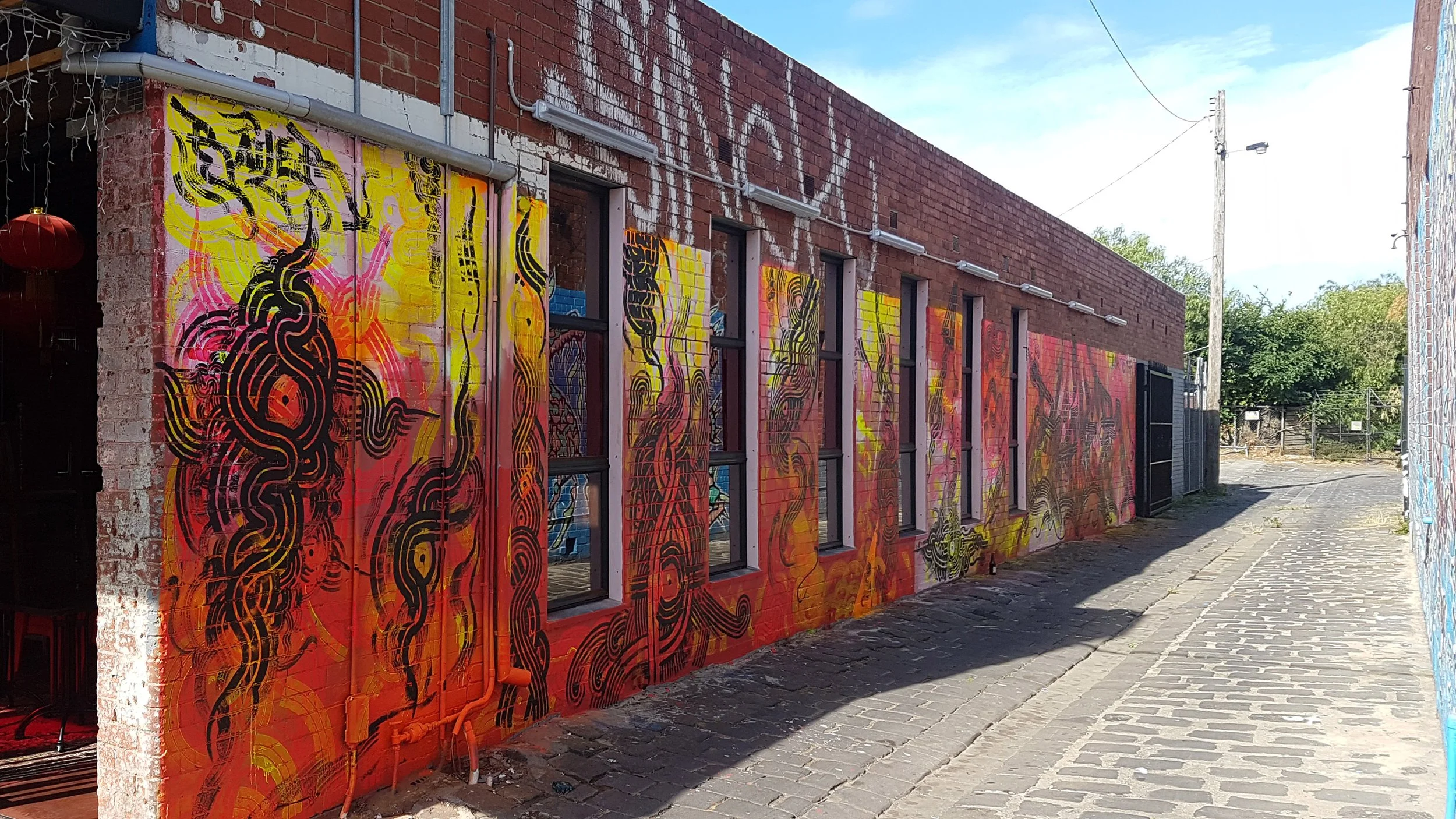
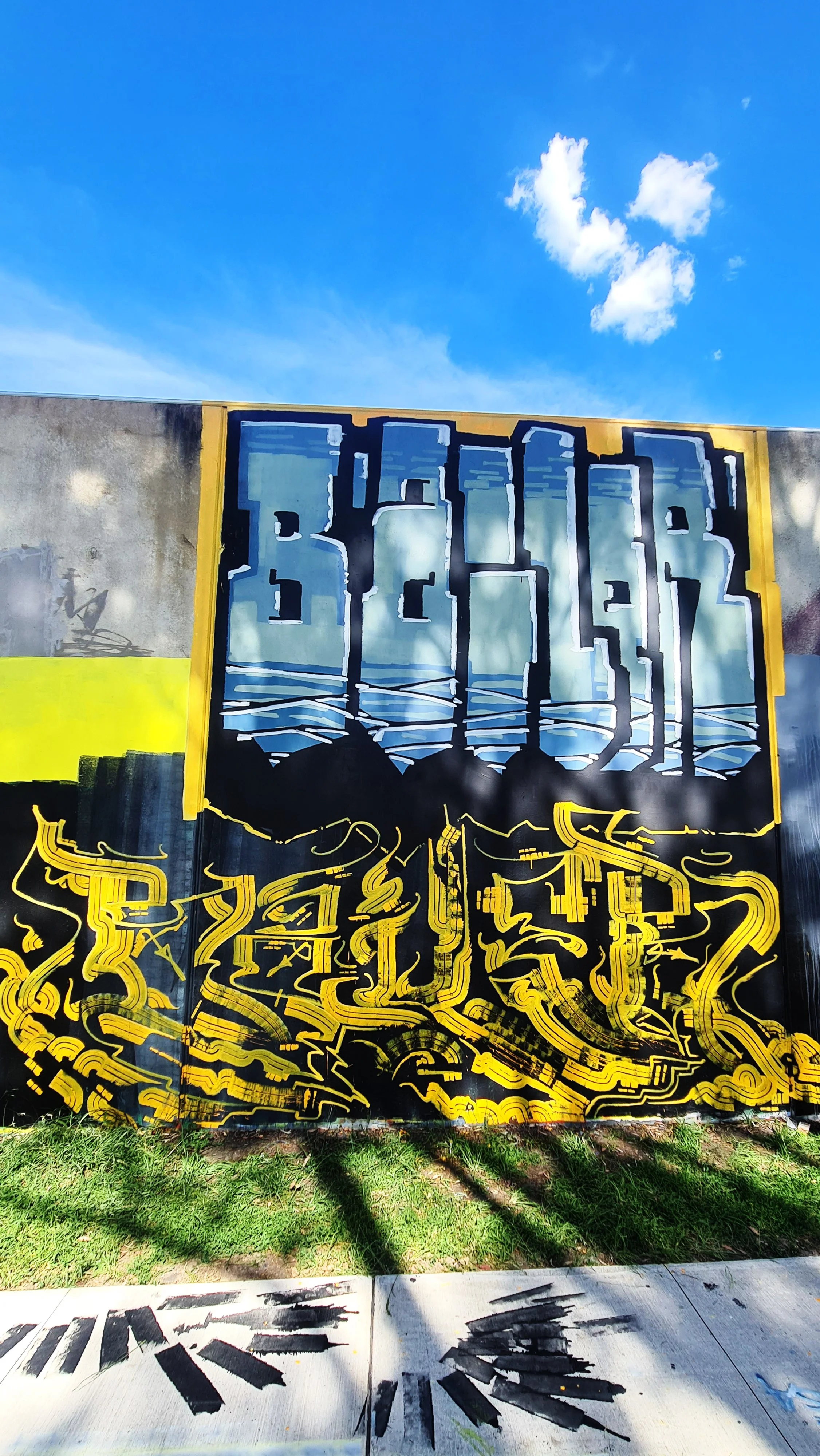
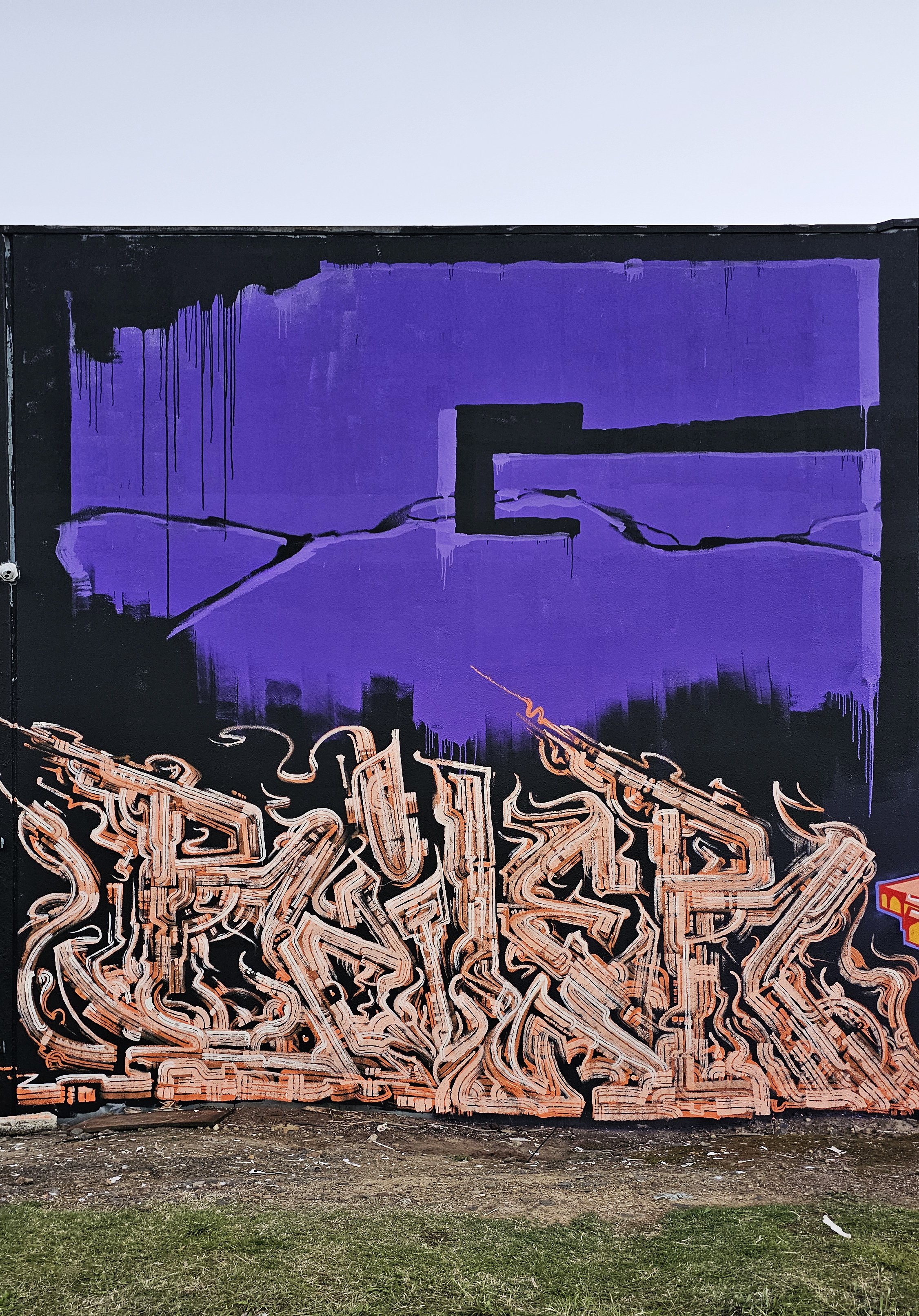
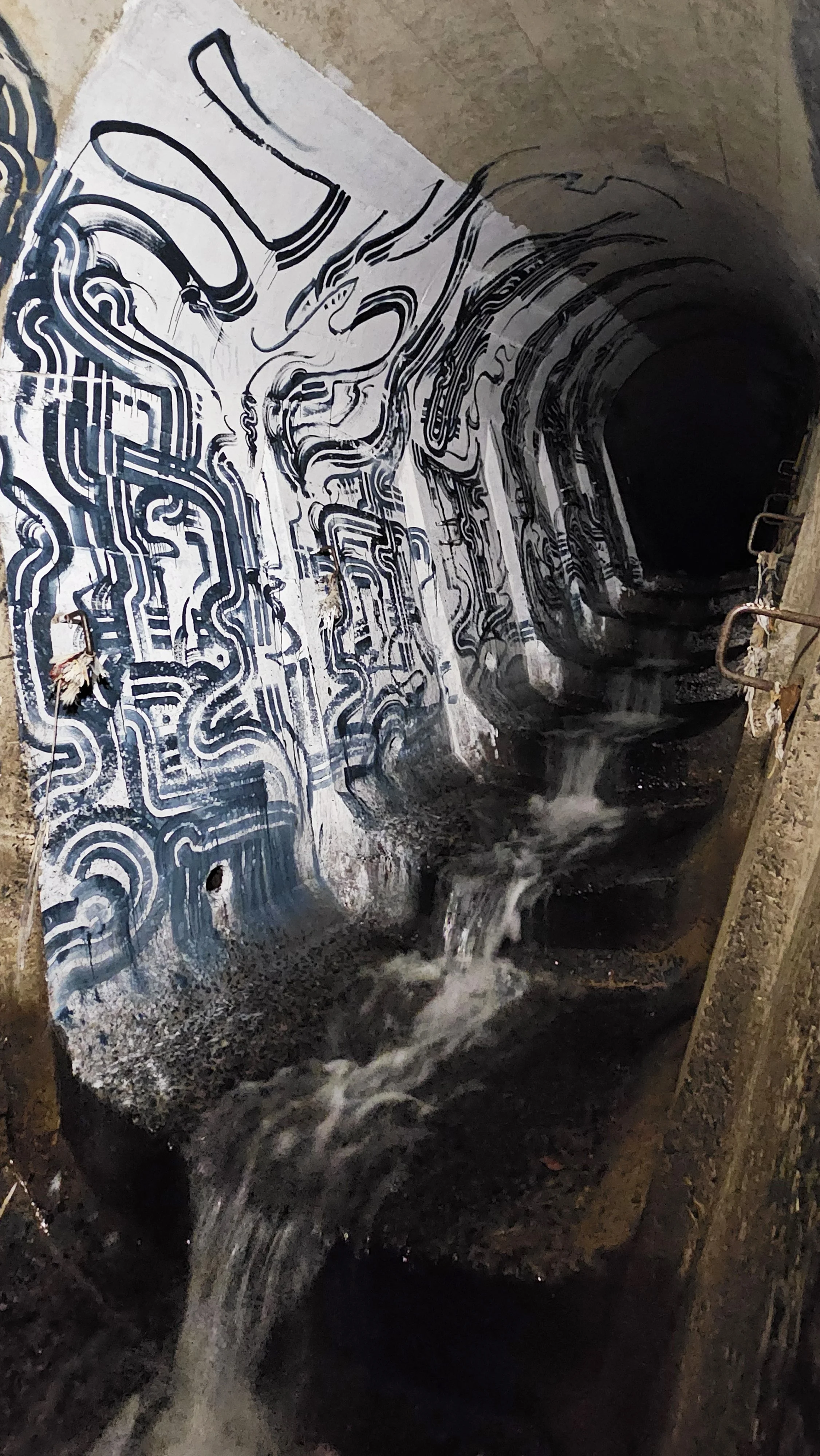
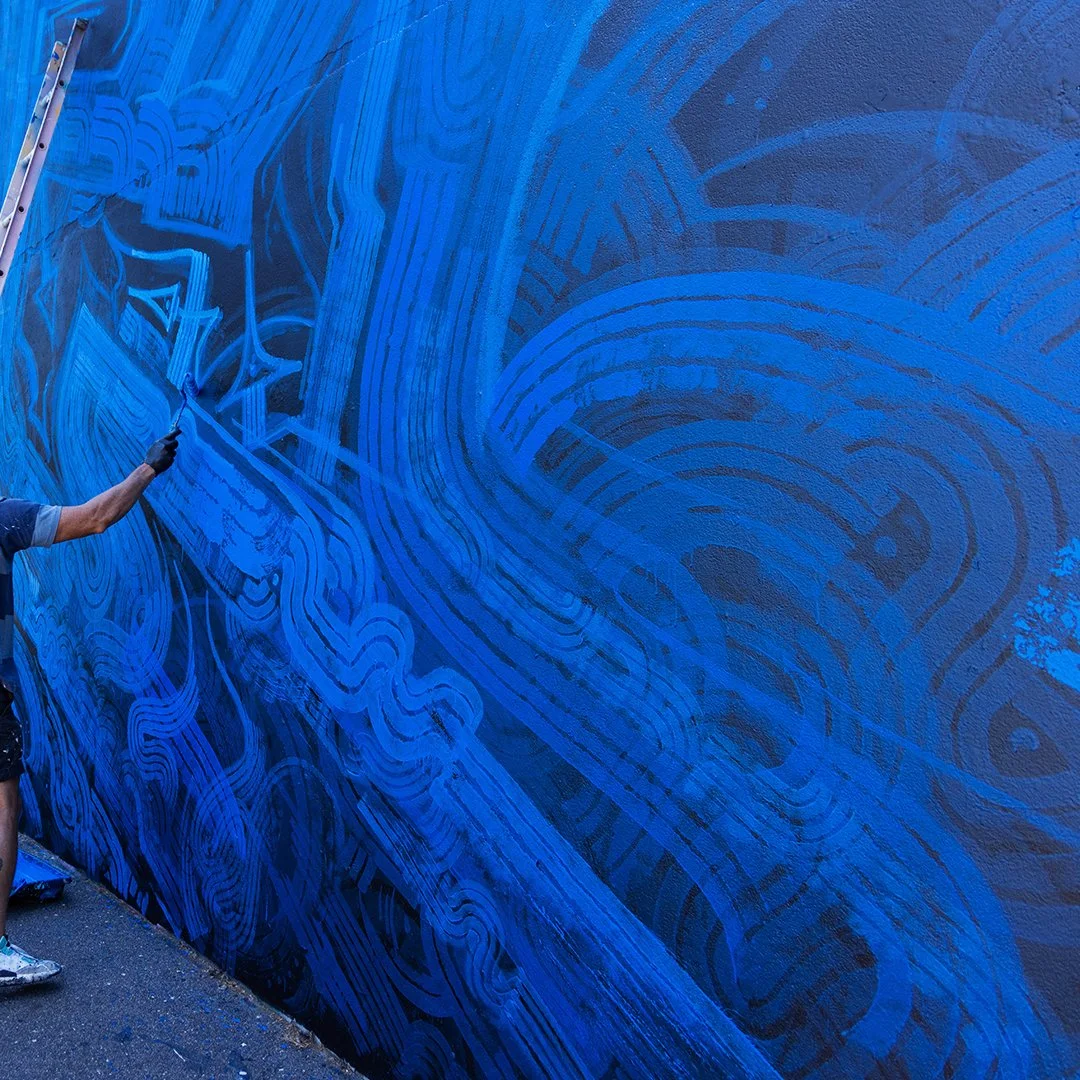
While painting in Bali, I could feel the local spray paint starting to affect me, so I began experimenting with house paint, brushes, rollers and sponges instead. Cutting into a sponge with a box cutter, I realised I could paint multiple lines at once. That discovery led me to start modifying brushes and rollers, eventually creating the Multiroller. After so many years as a graffiti artist, the movements involved in painting had become almost automatic. There is a physical rhythm to graffiti, with all the reaching, turning, repeating and moving across a wall. What interested me about the Multiroller was that it stripped things back and left something closer to a record of those movements.
Spray paint can be incredibly crisp and controlled, almost like an airbrush. The Multiroller does something different. You can see the texture of the wall, the nap of the roller, how much paint is loaded onto it and how much pressure was used. Those imperfections become part of the finished piece and give the work a personality of its own. Since then, I've kept experimenting with how the Multiroller can work across graffiti, murals and other parts of my practice. I don't really like painting the same way forever, so the technique has continued to evolve across different surfaces, subjects and scales. Nearly a decade later, I still feel like there are plenty of directions left to take it.